



Flush, Semi-Flush, Pendant, Chandelier, or Linear? A Guide to Ceiling Lighting

The right ceiling light balances practical illumination with the scale and style of the room.
A Guide to Ceiling Lighting
You know you need a ceiling light—but do you need a flush mount, semi-flush mount, pendant, chandelier, or linear fixture?
The names can sound interchangeable, especially when one fixture seems to fit more than one category. Understanding the basic differences makes it easier to narrow the choices and find lighting that suits your ceiling height, room, and needs.
| Fixture Type | Defining Feature | Common Locations |
|---|---|---|
| Flush Mount | Fits directly against the ceiling | Hallways, bedrooms, closets, lower ceilings |
| Semi-Flush Mount | Hangs a short distance below the ceiling | Bedrooms, kitchens, entries, living spaces |
| Pendant | Suspended by a cord, rod, or chain | Counters, sinks, tables, reading areas |
| Chandelier | Decorative fixture, often with multiple lights or arms | Dining rooms, foyers, bedrooms, living rooms |
| Linear Lighting | Long horizontal fixture with light distributed across its length | Islands, dining tables, counters, billiard tables |
Flush Mounts: Maximum Light With Minimum Drop
A flush-mount fixture attaches directly against the ceiling with little or no visible space between the canopy and the fixture body. Because it does not extend far into the room, it preserves headroom and keeps the ceiling visually uncluttered.
Flush mounts are a practical choice for lower ceilings, hallways, closets, bedrooms, laundry rooms, and other locations where people may walk beneath the fixture. Their compact profile does not mean they have to be plain—decorative glass, metalwork, and distinctive silhouettes can give a flush mount plenty of character.
Semi-Flush Mounts: A Little More Breathing Room
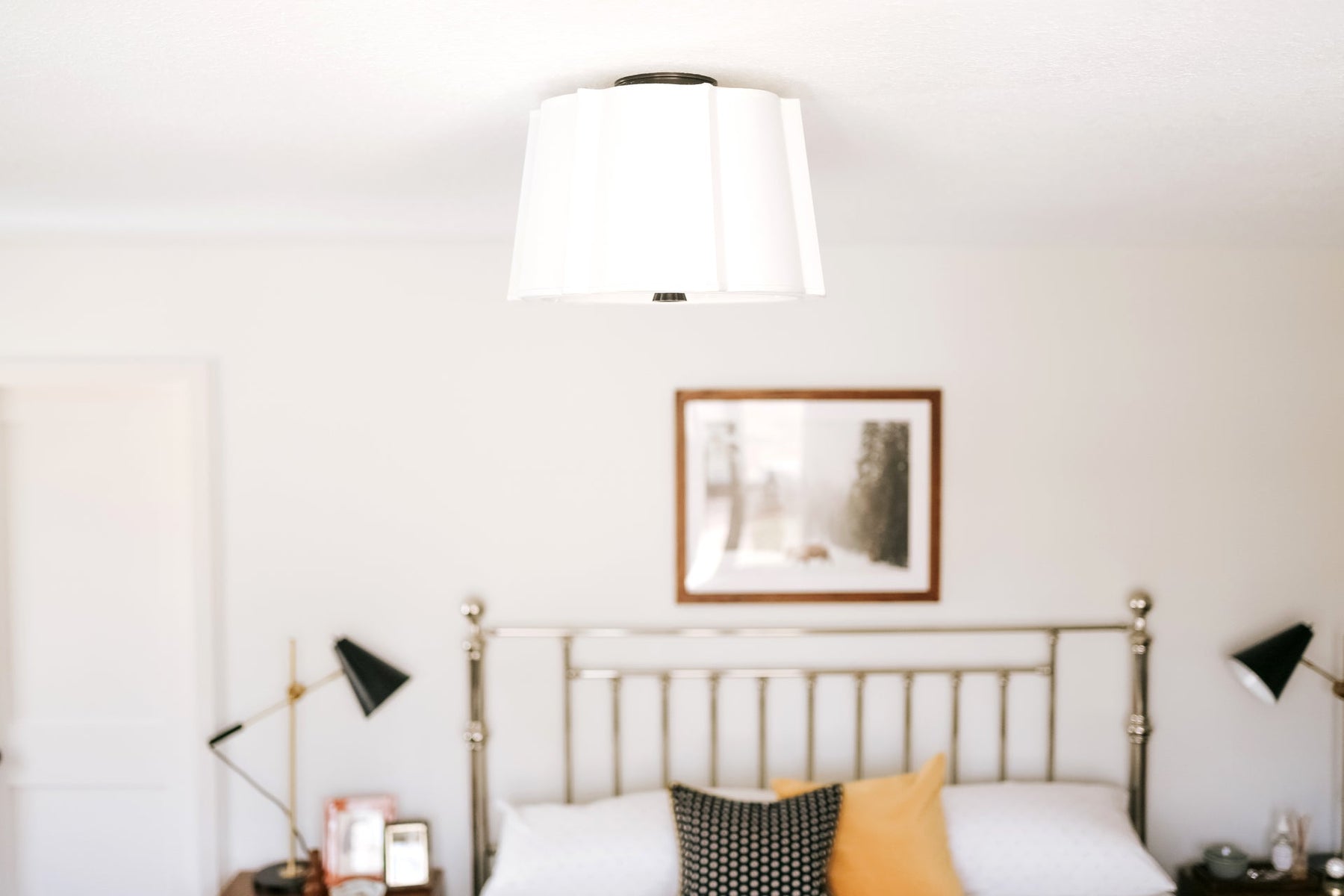
A semi-flush mount hangs slightly below the ceiling, usually from a short stem or decorative connector. The visible gap allows light to reach upward as well as outward, which can create a softer glow across the ceiling.
Semi-flush fixtures occupy the useful middle ground between a flush mount and a pendant. They offer more visual presence than a fixture mounted tightly to the ceiling, but they do not require the height or open space of a longer suspended light.
“The best fixture is not simply the one that fits the ceiling—it is the one that fits the way the space is used.”
Pendants: Focused and Flexible
A pendant hangs from the ceiling using a cord, chain, or rigid stem. Most pendants are organized around one primary shade or body, although designs can include more than one bulb.
Pendants are especially useful when light needs to be brought closer to a particular surface. They are commonly placed over kitchen counters, sinks, breakfast tables, desks, and reading areas. A single oversized pendant can create a focal point, while several smaller pendants can be arranged in a row or cluster.
The suspension length is part of the design. A pendant must hang low enough to relate to the surface beneath it without obstructing views, movement, cabinet doors, or everyday tasks.
Chandeliers: Designed to Be Seen
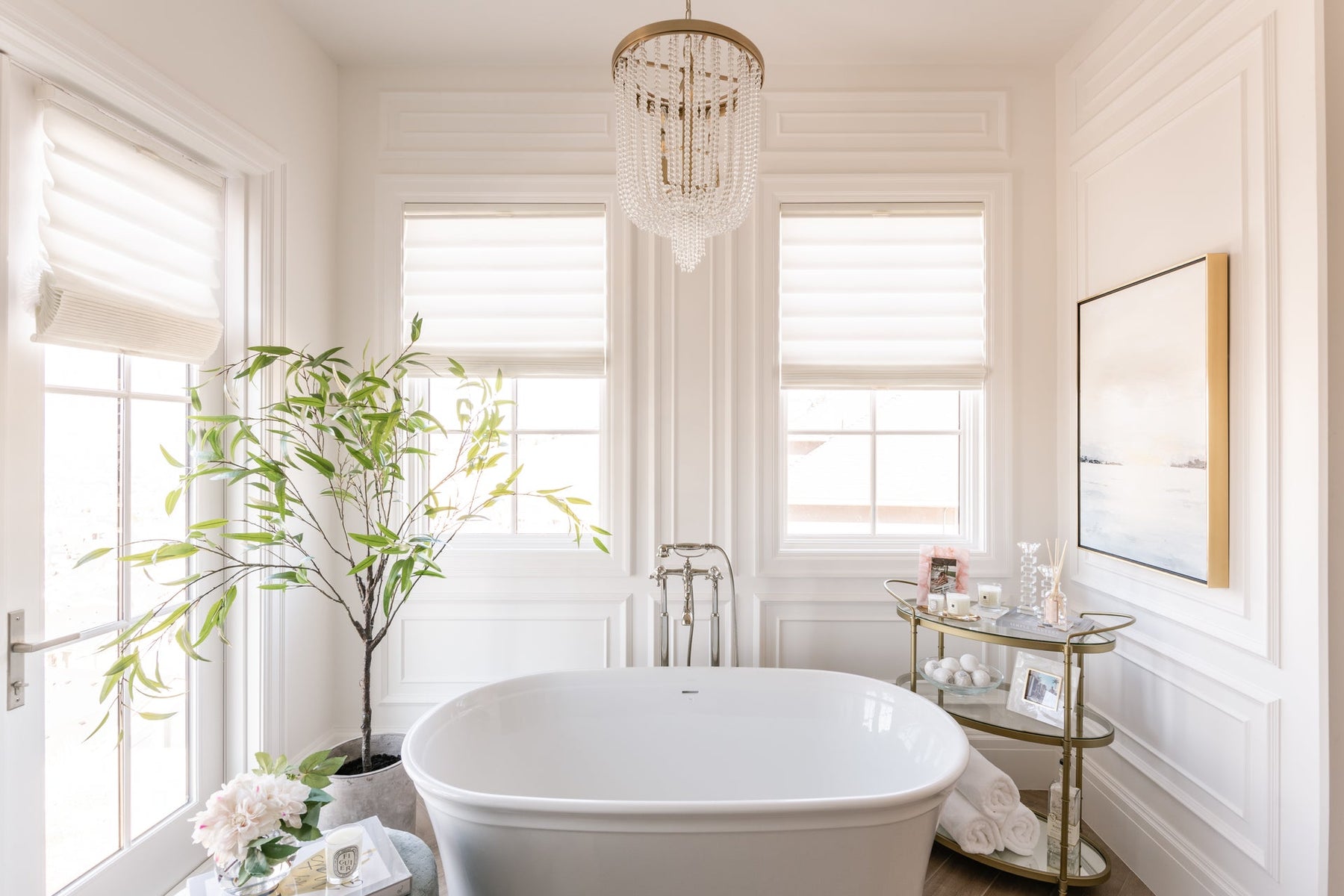
Chandeliers are decorative suspended fixtures traditionally recognized by multiple arms or light sources. Contemporary chandeliers may interpret that structure more loosely, but they are still generally intended to have a strong visual presence.
A chandelier can establish the style of a dining room, fill the vertical space in a foyer, or bring an unexpected focal point to a bedroom or living room. Because chandeliers are often wider and more visually complex than pendants, their scale should relate to both the room and the furniture beneath them.
Before Choosing a Suspended Fixture
- Measure the ceiling height and the fixture’s total hanging height.
- Consider whether people will walk beneath it or sit around it.
- Check the fixture’s width against the table, island, or room.
- Make sure doors, cabinets, and sightlines remain unobstructed.
- Consider the amount and direction of light the space needs.
Linear Lighting: Made for Longer Surfaces
Linear lighting describes a fixture with a long, horizontal form. Rather than concentrating the light in one central location, it distributes illumination across more of the surface below.
This shape makes linear fixtures a natural choice over kitchen islands, rectangular dining tables, long counters, and billiard tables. The fixture may contain a row of individual lights, one continuous illuminated element, or several lights arranged within a single elongated frame.
Linear lighting is not entirely separate from the other categories. A linear fixture may technically be a chandelier or pendant based on how it is constructed and suspended. “Linear” simply describes its overall shape and the way it relates to the space beneath it.
Begin With the Room, Not the Label
Lighting categories are useful, but the name alone will not determine whether a fixture works in your home. Start with the ceiling height, room dimensions, furniture placement, and the type of light you need. Then decide how much visual attention you want the fixture to command.
A low-profile fixture can still be decorative, and a chandelier does not have to be enormous. Pendants can be used individually or in groups, while linear fixtures may overlap with several other categories. The best choice is the one that provides the right combination of clearance, illumination, proportion, and style.
Explore our Ceiling Lighting Collection to compare flush mounts, semi-flush mounts, pendants, chandeliers, linear fixtures, and other options for every room and ceiling height.

The Right Light Starts With the Right Questions
Choosing a fixture involves more than finding a style you like. Our Michigan-based LuxuryLighting.com team can help you consider ceiling height, scale, placement, and lighting needs—so the fixture looks right and works properly in your space.


